Category: Articles

The Extravagance of God

Jeannette Cooperman interviews Prof. Lamin Sanneh, author of Summoned From the Margin about his conversion from Muslim to Catholicism.

A little boy grows up Muslim, falls in love with Catholicism, and winds up one of the world’s foremost scholars on both traditions.

Lamin Sanneh grew up in Gambia, where years were measured by the number of rains you’d seen. He carried the blood of the nyanchos, an ancient African royal line. His grandfather was an Islamic scholar. His father had many wives. Lonely, thoughtful, restless in a way he didn’t understand, Sanneh discovered Christianity and asked to convert, to his family’s chagrin, when he was a teenager. The Methodists stalled; the Catholics were initially reluctant. Finally, just before he left Africa to study in the U.S., he persuaded a minister to baptize him. Years later, he was accepted into the Catholic Church.

Today, Sanneh is the D. Willis James Professor of Missions and World Christianity and professor of history at Yale Divinity School. Pope John Paul II appointed him to the Pontifical Commission of the Historical Sciences; Pope Benedict XVI asked him to serve on the Pontifical Commission on Religious Relations with Muslims. He’s written a long list of acclaimed books and articles about Islam and Christianity.

Sanneh writes easily, his prose mixing formal elegance with a dry sense of humor. But only recently, at the urging of his children, did he write a more personal book, a memoir titled Summoned From the Margin. It’s the story of his conversion.—Jeannette Cooperman


The Renewal of the Liturgy 50 Years Later

The Constitution on the Sacred Liturgy (Sacrosanctum Concilium), completed by the Second Vatican Council in December 1963, set in motion the most far-reaching liturgical reform in Catholic history. The initiation of this momentous change within the Catholic Church in America came on the heels of the social and political upheaval...

Celebration Honors Liguorian’s 100 Years of Catholic Sustenance

Bishop Rice Notes Redemptorists’ Local Contributions and Says Magazine Continues the New Evangelization

Keynote Speaker Margaret O’Brien Steinfels Calls on Catholic Media to Meet “Challenging Demographics” 

Liguori, Mo. (Oct. 16, 2013) – A Catholic publication that started with $50 in capital marked its 100th anniversary Wednesday with a look to the future that included a new blog aimed at Catholics who don’t go to church.

 Liguorian, a magazine widely known among American Catholics, marked the centennial of its founding with a celebratory Mass and banquet at St. Francis Xavier Church and Ballroom at St. Louis University. Liguori Publications, publisher of Liguorian and a ministry of the Redemptorists, was joined by the order’s priests and brothers, as well as its authors, business partners, and friends


Full Circle: Hispanics and U.S. Catholicism

Timothy Matovina Many parishes and dioceses tend to focus on the challenges presented by the growing Hispanic presence. This is not surprising; a previous influx of Catholic newcomers to the United States was met with a similar attitude. Yet in the 2002 document Encuentro and Mission: A Renewed Pastoral Framework...

Contemplative Places of Prayer

Kathy is a wife, the mother of three boys, and a full-time nurse. She and her husband lead a full life. Much of their time is filled with evening practices and weekend games related to the boys’ sports activities. The couple dreams of taking a family vacation. Like many people,...

Faith of a Soldier

“Dad, I’m going to have to exercise your angel.” “My roommate asked why I believe there’s something out there,” Zinn recalls. “He said, ‘What if there isn’t?’ and I said, ‘Then so be it. But what if there is?’ ” As Smith listened to the snores of thirty men sleeping in...

A New Mourning

 January 2012

Five-year-old Amy anxiously asked, “Is my mother here?”

“Amy, how nice to see you!” exclaimed Mrs. Murphy. “Won’t you come in and visit for a while?”

Amy’s big brown eyes darted past Mrs. Murphy and peered into her parlor, hoping to see another person there. Disappointed, she answered, “No, thank you, Mrs. Murphy. I’m just looking for my mother. I know she sometimes stops here on her way home from shopping.”

What do I say to this child? Mrs. Murphy asked herself, turning a little pale. Then, regaining her composure, she said, “Amy, please come in for a minute. I just happen to have some gingerbread cookies! How about having some milk and cookies with me?” tempted Mrs. Murphy as she remembered the last time she had seen Amy. 


CPA_Award_2013.jpg

Liguorian Recognized at 2013 CPA Media Conference

CPA_Award_2013.jpgLiguorian showed a strong presence at the 2013 Catholic Press Association Media Conference. With more than 200 publications present, Liguorian was proud to be recognized in six different categories. Included is a list of honors—category, place, title, issue, and author. All quoted material is attributed to the judging panel.
824371.jpg

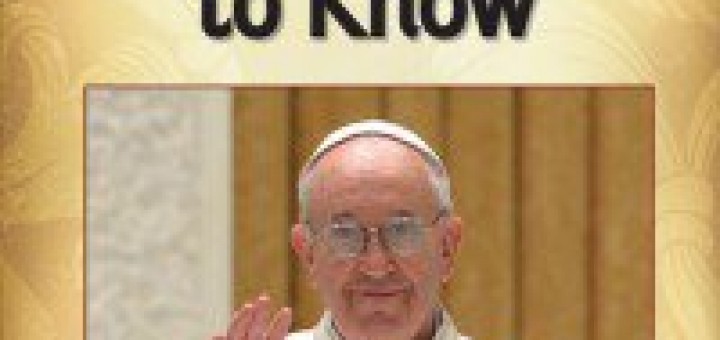
Get to Know Pope Francis

824371.jpgIt’s been just a short time since the election of Pope Francis, yet “urban legends” about him are blooming like spring flowers in St. Peter’s Square. To know the real Pope Francis, ignore the myths and focus instead on the attributes and values he has exhibited before and after his election, according to John L. Allen, Jr., senior Vatican analyst for CNN and senior correspondent for the National Catholic Reporter. Allen has authored an intimate introduction to Pope Francis: 10 Things Pope Francis Wants You to Know. It’s one of the first publications about the new Pope that includes details from the early days of his papacy.


A Witness to Reconciliation

Easter lives with us as the core event of Christianity—the event that continues to give us direction more than 2,000 years after Jesus’ resurrection. We still look at the empty tomb and search for a reason his body wasn’t there. God’s plan extended beyond Jesus and through the disciples and...

After Benedict: A Look Ahead

When Pope Benedict XVI surprised the world with his resignation in February, a flood of questions followed, starting with “Can a pope resign?” to “What happens now?” His startling move has sent pastors, parishioners, and reporters back to Church history. There we find a handful of papal resignations, to be sure,...

Listen With Your Eyes

“Just where is your head?” Growing up, I often got lost in my own world instead of focusing on whatever was at hand. I’ve since learned that I take in information primarily through listening. Unless I make an effort, I tend to miss a lot of nonauditory details—especially visuals—and what...

Vatican_Inside_1.jpg

Then and Now

Vatican_Inside_1.jpgVatican II and the People of God

This year the Church celebrates the fiftieth anniversary of the opening of the Second Vatican Council, which began October 11, 1962, and concluded December 8, 1965. Those of us who remember the unfolding of this event knew we were witnessing a historic moment. 

In the 2,000-year history of the Church, there have only been twenty Church councils. The previous one, Vatican I, occurred in 1870; the one before that was the Council of Trent, which took place from 1545 to 1563. 

Every Church council has had an important impact  on the life journey of the Church, and certainly that can also be said of Vatican II. What would you expect? At times more than 2,300 bishops from all over the world took part. Compare that with Vatican I’s 730 mostly European bishops. The bishops who participated in Vatican II couldn’t help but realize that the power of the Holy Spirit was guiding them. 

Icons

Praying With Eyes Wide Open

What many Catholics may not know is that Our Mother of Perpetual Help is an icon and comes to us from the liturgical tradition of the Orthodox Church. The Greek word for icon originally meant an image of a person, especially a royal person, that was painted or made of mosaic. Over time, however, icon came to refer to the sacred images of Christ, Mary, and the saints used in the celebration of the Divine Liturgy of the Orthodox Church, as well as for prayer and devotion in the homes of its members. 

Until recently, with the exception of Our Mother of Perpetual Help, it was unusual to see icons in Catholic churches and those of other Christian denominations such as Episcopalian and Lutheran. But today it is common for Western Christians to see icons of the Holy Trinity, Christ, the Blessed Virgin, and the saints in their churches and to have them in their homes. Even so, icons remain somewhat of a mystery to most Christians of the Western Church. 

So is there a difference between an icon and the other religious statues and pictures that are more common in Catholic and other Christian churches? The answer is yes. In fact, there are three main differences between icons and the religious art of the Western Church: the purpose of icons, the way icons are made, and most important, how they are used in prayer and worship.


Modeling Mary: Our Pilgrimage of Faith

The Church made an unexpected statement about the Blessed Virgin Mary during the Second Vatican Council. At this meeting of bishops, Church leaders referred to Mary’s life as a pilgrimage of faith, a theme Blessed John Paul II explored and further developed in his encyclical letter Mother of the Redeemer, as he spoke of the Church’s faith pilgrimage.

This reference to Mary’s faith journey was unexpected because pilgrimage implies movement toward a goal, and prior to the Second Vatican Council, the Church rarely thought of the Virgin Mary as progressing in her faith. This point is important because even the deepest faith does not bring clear knowledge of the ways in which God sustains and accompanies our lives and our world. Blessed John Paul II tells us that faith at times involves a perplexity, a heaviness of heart, such as that described by Saint John of the Cross as a dark night of faith in which our understanding is clouded or tested.


Get A Life

God’s Grace at Work in Us

When it comes to living a Christian life, we often hear the phrase, “Making a life around virtues and values.” And though we hear it, we still tend to ask, What does it mean to “make a life”? Doesn’t life just happen?

In reality, with each and every conscious decision, we make ourselves to be certain kinds of people. Every honest word spoken and every resisted temptation to lie make us honest people. Every unkindness—in word or in act—makes us unkind people. In that sense, we are the architects, the builders, of who we are and what we will become. We make ourselves to be one kind of people as opposed to other kinds: honest rather than dishonest, kind rather than unkind, generous rather than selfish, caring rather than cold.

Of course, as Christians, we expect and we hope more and more that these individual decisions and this work of constructing ourselves will be guided by that divine Architect, according to his plan and with the help of his gracious presence. But even according to his plan and with his divine help, we ourselves must decide and act—thus making a life for ourselves, making a life of ourselves.


Trees Must Bend

0412_tree.jpgFiction

Kate tore the letter open eagerly. Letters from Dan were few and far between. Her eyes scanned the page in one fell swoop, looking for danger. Then her face relaxed and she went back to read for details. Kate always read letters from her children that way. She supposed all mothers did. It was the same way she looked her children over on the first meeting after a long separation. The kids called it “Mom’s assessment.” They joked about it, but they knew better than to try to hide anything from Mom.

Kate read as intently as she listened; picking up clues, probing for more. Letters, thought Kate, are very unsatisfactory, and she went back and reread the brief letter once more. Her face was troubled when she finally laid the letter down on the table in front of her. I have to show this to Ben, she thought. It’s not right to keep Dan’s letters from him. He loves Dan just as I do, and I would never forgive him if he kept a letter from me. 

But Dan’s letters were becoming increasing foreign to both of them.


0212_communion_02.jpg

We Are Family

0212_communion_02.jpgSpiritual Maturity | Part 5 of 6

“I’m spiritual but not religious.”

What do people mean by that statement? Some are probably avoiding official—organized—religion. Others may reject the faith they once belonged to because they are uncomfortable with particular teachings. Still others may have been hurt by Church leaders, teachers, friends, or family members who are religious.

It is true that some religious folks have harmed people. When those connected with God and with the Church hurt others, their actions reflect upon the Church and God. This reality is the subject of one of Jesus’ hardest sayings: “Whoever causes one of these little ones who believe in me to sin, it would be better for him to have a great millstone hung around his neck and to be drowned in the depths of the sea” (Mt 18:6).

heart_rice_1.jpg

I’ll Stand By You

heart_rice_1.jpgSpiritual Maturity

Part Four of Six

Jesus sees Jerusalem in front of him. One can hear his heart breaking in his simple, earthy words, “How many times I yearned to gather your children together, as a hen gathers her young under her wings, but you were unwilling!” (Mt 23:37). Jesus has walked long, hot days to get here. He wants to put his arms around these people and embrace them. And yet he knows this is the city that kills prophets and stones those who are sent to it.