Category: Web Only

Girls, Body Image, and Well-Being

Written by Phyllis Edgerly Ring April 2001 Scripture tells us that each of us is created in God’s image. Yet our culture seems to contradict this at every turn. The average women’s magazine cover promotes a diet plan that can’t fail-and then pictures a dessert that will never be a...

Easter: Love’s Triumph Over Death

Written by Wendy M. Wright April 2001 Easter is a hope that death will not sever the bonds of love, that loss of one another here does not mean loss of one another forever. Click here to read the entire article

What’s Wrong with Smoking Pot?

Written by John Farnik, CSsR Published August 1978 Here’s the situation. You have been asked to a “party” with a group of friends and you know that means pot. You are confused but curious about marijuana. You are certain your parents would be opposed, but you also know that they...

Race Relations: A Major Test for Modern Christians

The question of the rights and privileges of our colored fellow citizens is not just the removal of certain abuses. It is a far deeper question: that of setting at liberty those positive spiritual qualities that the Negro people are called—in God’s divine providence—to contribute to the good of all...

Throwback Thursday-Premarital Sex

Published September 1983 Why does God give us beautiful bodies and sexual desires in our early teens just to slap our hands and say “Not yet, Junior!”? Let’s take a look at the total picture to find our answers to that question.  Click here to read more.

The Bittersweet Joy of Forgiveness

The Bittersweet Joy of Forgiveness By: Patrick Kaler, CSsR April 1977 A Priest looks at the new confession. Most people thinking of the long confessional line, would date this as pre-Vatican II. And ever since that time many pastors have been asking: “What caused that line of penitents to shrink...

The Anza-Borego Desert

In early March, the Anza-Borrego desert is in bloom. That is when a miracle of the season occurs. I have always been fascinated with Scriptural references to the desert experience, for many of these allude to the fact that the desert (both materially and metaphysically) prepares us to listen to God’s voice in the emptiness of our own souls.
 
Certain scriptural references alluding to this have always been among my favorites, including the one that goes, “I shall lead her into the desert and speak tenderly to her there” (Hosea 21: 16-17). At times, I feel sorely in need of God’s “tender speech” when life becomes most challenging. Even finding the time to appreciate and marvel at God’s gifts on earth is not always easy to do. My soul had become hungry for beauty—the kind that nurtures us, renews us, and imparts special insightsand a sense of the sacred. I knew that I needed to revel in this beauty, and realized that to love God’s creation is in itself a way of offering thanksgiving and praise.
 
Years of an exhausting work schedule after my husband’s death made me thirst for God’s tenderness and Christ’s promise of water that would quench our thirst forever (John 4:7). Still, I was unprepared to happen upon the miracle of the Anza-Borrego Desert in early March after a month of soggy Southern California rain—even more welcome after a wildfire had swept through the region the year before, mingling ash with mud, choking the waterways. Then, suddenly rain brought life back to our hills, revived mossy trunks that had been blackened, and birthed vibrant leaves. One weekend, a friend and I planned a drive to the Anza-Borrego Desert, only an hour’s drive from San Diego. As we descended the slopes of the Laguna Mountains, we could see the hazy pastels of the desert floor in the distance.  Coming into the desert itself, flowers formed a fragrant sea of textured color that stretched from one horizon to the next.

Meeting Jesus in the Mall

 For many religious people the mall is one of America’s prime symbols of crass materialism; yet that idea is only partially true.  During the time I worked there, I met Jesus on numerous occasions. 
 
My journey began when my religious superior asked me to look for a job after I left my position as a parish director of adult religious education too late to be assigned elsewhere.  The job had to be part time as I also had been allowed time to write.  When I finished my list of possibilities, I remembered an acquaintance who is the owner of a religious retail store. She told me once if I knew anyone who was honest she would be interested in talking to that person.  So I called her and blurted out, “How would you like to hire me?”  She called back thirty minutes later and I had a job.
 
I didn’t have to wait long for my encounter with Jesus as my first eye-opener took place during the evening I started work.  Three young women with tattoos laced up their arms walked in.  I asked one of them if they were looking for something particular and if I could be of help.  Then the oldest of the three responded, “Do you have any prayers for the poor souls in purgatory?”  To this day I hope my face didn’t express in neon what I was initially thinking.  Like Abraham’s three visitors, these women helped me to be more open to the Divine Presence when It was least expected.

Drinking Poison

 No, I’m not talking about weed killer or some other chemical that can damage our health. I am talking about nursing resentments and failing to forgive.  

I once heard an evangelist on the television say, “Having resentment towards someone is like drinking poison and expecting the other person to die.”  How true.  When we hold on to resentments, gripe about our unfair burdens, and fail to forgive those who have harmed us, we damage ourselves and those around us.  We allow ourselves to become victims over and over again.  
 
The hurt inflicted on us or those we love cannot be forgotten. Try as we might, we cannot forget an event that happened just because the information retrieved is painful.  God gave us memories and intellect.  We are not like God in this respect.  When God forgives, God forgets.  We have a forgetful God.  How marvelous!  Our sins, when confessed, are plunged into the deepest part of the sea, never to arise again – unless we drag them up.
 
The same is true when someone unjustly harms us.  If we nurse the pain and change our expressions whenever that person’s name is mentioned; when we steel ourselves and harden our hearts, then we perpetuate the original crime.  Of course, this hardness most often hurts the people around us – our family members who misinterpret our coldness, friends who cannot break through our defenses, and educators who sense our distraction and often our disinterest.  The plank of un-forgiveness even blinds us to our sins and failures.  We end up hurting ourselves and others even more than the original offense hurt us.  We neglect Jesus’ command to “forgive those who trespass against us,” so that we ourselves can experience total forgiveness.  
06_26_14_cover_Three_Myths_About_Aging.jpg

Three Myths About Aging

 Published July 1981 I contend that we have been brainwashed into seeing old age as a disease rather than the last and most beautiful phase of human life, which God intended it to be—the golden age. Old age can be a time of discovery, a time to meet aspects of...

tbt_cover a salute to vietnam vets.jpg

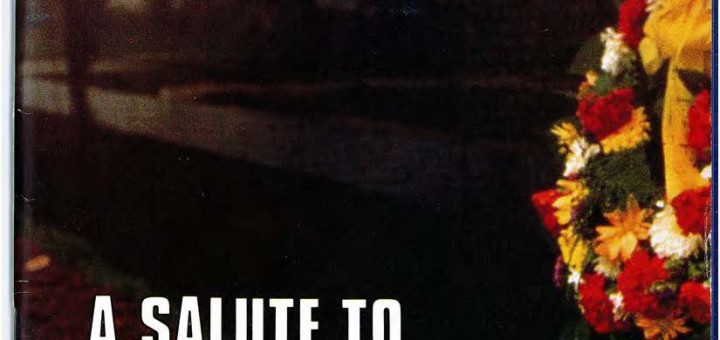
A Salute to Vietnam Vets

Published November 1985 Approximately two and a half million young men and women served in U.S. military forces during the Vietnam War. Many still carry repressed memories of violence and terror, with frightening flashbacks fueling living nightmares.  “They want us to try to understand what they suffered, to accept them,...

0703_Throwback_Thursday_Cover.jpg

A Positive Approach to Sex

Published July 1966 Teens on Target Section Written in response to a reader’s letter~ The big difficulty with sex in the modern world is not its quantity but its quality. Everwhere you look there are a million contradictions. In the books and movies you are told it’s great! It’s glorious...

The Smile

Her name was Sister Mary Benigna, a Roman Catholic nun who taught in a parochial school many years ago. She became a profound influence in my life when I was in the fourth grade. For two years I attended Sacred Heart School in Davenport, Iowa. Sister Mary Benigna was a slender young nun robed in a long black habit, and a starched square of white linen framed her face with her head covered by a long black veil. Swinging from her tiny waist hung a long brown-beaded rosary. She taught her class in a gentle yet firm way, gaining the respect of my classmates.

For some reason she took a liking to me, and I adored her. This incident I will remember   forever and has made me regard praise and worship of the Lord in a new and totally different way. Her relationship to Jesus was the most personal one I had ever encountered. One afternoon in the spring of the year she took me aside into a private room to talk to me for only a few moments. What she said struck a lasting chord in my spirit, and I realize the lasting effect our words can have.

Child of Autumn

  “Are you having a good trip with your grandmother?” was a question often put to me when I traveled with my mother.  Her hair had turned white in her forties and in those days women accepted their white hair. At least in our locale they did- and they often accepted babies late in life as well.  But still we looked, to much of the world, like a grandmother and granddaughter traveling together. 

The question bothered me a little because it told me that we didn’t look the way a mother and daughter should look. The polite grown-ups who asked seemed wise so they must be right. We must be different.

But if they looked past the white hair they would have seen the youthful sparkle in my mother’s dark eyes- the eyes that flashed at me from behind a tree when we played hide and seek and made me happy just to be alive.

Saran Wrap and the Perfect Prayer

It is a summer morning and I am seven or eight years old, skinny as a sapling and as lithe as, well, a skinny seven or eight year old.  Halfway up a silver maple tree in our front yard, I pause. The wind is coming up. It is a moment of grace, and I feel the arrival of a weather front like a secret just for me. I turn my face into the wind and close my eyes, and the cool air washes over me. The tree begins to creak and sway.  It is exhilarating …..for a minute. Then the swaying becomes more violent. I know I ought to climb down, but that means letting go of branches and trying to keep my balance along the way. Instead I cling like Saran Wrap to that tree trunk and start praying—and shouting—for help.

Fast forward many years. It is a Sunday morning in early summer. I am at a Sunday service, with sunlight streaming through the windows and spilling over a cool wood floor.  There is a small group of people with me at this Buddhist monastery, 20 or so others, all in our socks or bare feet. There is a sequence of group chants and responses that I cannot understand but can sound out, which somehow feels a little familiar. Then, an interesting talk by the abbot. Again, there is a comfortable feeling.

More chanting. We rise now from the floor and walk silently, in prayer or meditation, depending on our need. We move single-file in a silent line, out of the room on one side, down a hallway, and back into the room again. Ten times, 20 times, I don’t recall. This is the Walking Meditation.

So You Miss Mass

“A bit of hard, straight talk to that sad segment of Catholics who, for silly reasons, miss Mass on Sundays.”—lead in written by the author. Click here to read the entire article.

Let’s go back in time…

More than 100 years in publication yields a lot of content! Join us for Throwback Thursdays to trek back in time and see how Liguorian has always been in line with what’s relevant.

Birth Control: What did the Council Say?

Published April 1966 The Liguorian editors continue to receive letters from obviously sincere people asking questions about birth control. A very common question is: “What did the Ecumenical Council actually say about birth control?” Click here to read the entire article.